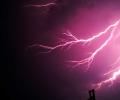
Lightning claims more lives in India annually than any other extreme weather event. Between April and July this year alone, 1,621 people died due to lightning strikes.

The best summer foods of India

India is likely to see above-normal maximum and minimum temperatures in most parts of the country in the March to May period, IMD director general Mrutyunjay Mohapatra said at a press conference.

Notwithstanding the sweltering heat engulfing major cities, travellers can find solace in the steady airfares to popular summer destinations like Srinagar, Bagdogra, and Kochi. According to airline executives, capacity increases and moderate demand have kept spot airfares from scorching cities like Delhi on a par with the same period last year.

Delhi's peak power demand reached an all-time high of 8,302 MW on Wednesday afternoon as the city logged its highest-ever temperature of 52.3 degrees Celsius at the Mungeshpur weather station.

India's power sector CO2 emissions fell in H1 2025 for the first time in nearly 50 years (outside the pandemic), thanks to record renewable growth and lower coal use from cooler, wetter weather.
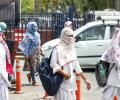
The annual mean temperature in 2024 was 25.75 degrees Celsius, 0.65 degrees above the long-period average.

Several firms are stepping up to help their workforce cope with soaring temperatures
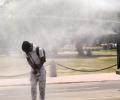
Delhi is experiencing its first heatwave of the season, with temperatures reaching 40.2 degrees Celsius. Doctors have warned that exposure to extreme heat can lead to a range of health issues, from mild rashes and muscle cramps to serious conditions like heat exhaustion and heatstroke. They advise staying hydrated, avoiding outdoor activities during peak hours, and wearing light, breathable clothes. Vulnerable groups like children, the elderly, and those with pre-existing conditions are at greater risk.

The Indian economy could remain less affected by global trade wars than other countries because the two engines of domestic growth - consumption and investment - are likely to face a limited impact from such headwinds, according to an article on the 'State of the Economy' in the Reserve Bank of India's (RBI's) bulletin, released on Tuesday.
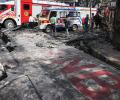
'In 50 seconds, the pilots were fighting drag, trying relight, throttling up and avoiding obstacles.' 'They had neither height nor speed. There was no margin.'

India is set to experience extreme heat during the April to June period, with the central and western peninsular parts expected to face the worst impact, the IMD said on Monday as the country prepares for seven-phase general elections from April 19.

States are mandated to develop and implement 'heat HAPs' for prevention of heat-induced diseases. But most do not go beyond standard advisory on heat prevention.

Climate scientists warn that climate change is intensifying heatwaves in India, with the cooling effects of La Nia potentially becoming less effective in a warmer future. The India Meteorological Department (IMD) predicts an early summer with above-normal temperatures and intense heatwave spells, following an unusually dry winter and the warmest February since 1901. Experts emphasize the role of human-caused climate change, along with natural climate drivers like El Nio and La Nia, in shaping weather patterns. While La Nia typically brings cooler temperatures, scientists suggest that under climate change, its ability to mitigate heatwaves may be diminished.

The mercury soared to 46.2 degrees Celsius at Najafgarh, making it the hottest place in the capital.

In Professor Sulochana Gadgil's passing, India has lost a scientific giant, a fierce intellect, and a compassionate soul, remembers Dr Madhavan Nair Rajeevan.

The planet experienced its warmest January on record last month despite the development of La Nia, a climate pattern that usually brings cooler global temperatures, the European climate agency said on Thursday. This comes on the heels of the Earth experiencing its hottest year on record in 2024, also the first to see global average temperatures rise 1.5 degrees Celsius above pre-industrial levels. According to the Copernicus Climate Change Service (C3S), January 2025 recorded an average temperature of 13.23 degrees Celsius, 0.09 degrees warmer than the previous hottest January (2024) and 0.79 degrees above the 1991-2020 average. Scientists also found that the Earth's temperature in January was 1.75 degrees Celsius higher than pre-industrial levels. Global temperatures have stayed above the 1.5-degree mark for 18 of the last 19 months.

From Jhargram to Kanyakumari, Rediff.com's Uttam Ghosh shows us what summer feels like in most parts of the country.
'The intensity and frequency of heatwaves will be much higher than in previous years over Punjab, Haryana, Rajasthan, Gujarat, Madhya Pradesh and Odisha.'
India experienced its second-hottest quarter from June to August this year since 1970, with over one-third of the country's population enduring at least seven days of dangerous heat, according to a new report by a United States-based group of climate scientists and communicators.

People flock to electronics shops to buy air conditioners.

Delhi recorded its second hottest April this year since 1951 with a monthly average maximum temperature of 40.2 degrees Celsius.

The event, for which people had started gathering since morning, began around 11.30 am and went on till around 1 pm. That day, the nearest weather station to the spot of the programme recorded a maximum temperature of 38 degrees Celsius.

In the past 10 years, over 500 PSB officers have died by suicide. When targets are overwhelming, senior management and customers are both impatient, and there is constant fear, not every banker has the resilience to survive and thrive, warns Tamal Bandyopadhyay.

Prime Minister Modi last week called for optimal grain storage, fire audits and mock drills in hospitals as preparations for the harsh summer forecast by the meteorological department.

Melting roads, deserted streets, exhausted pedestrians, and thirsty animals is what the scorching summer has left Indians with. Severe heat wave conditions currently prevail over many parts of the nation with temperatures in central and western India soar beyond 45C. Take a look!

Temperatures remained above 45 degrees Celsius in large parts of Rajasthan, Haryana, Delhi, Chandigarh and Uttar Pradesh, affecting daily life as many chose to remain indoors in the afternoon.

Rediff readers send us their best summer memories.


The India meteorological department has issued a yellow alert, warning of a fresh heatwave spell in Delhi which may see temperatures soaring to 44 degrees Celsius by Wednesday.

The actor demonstrates how to steal the spotlight on a hot sunny day.

The list of 'dos and don'ts' comes after the India meteorological department issued its first heat warning for 2023.

More than 80 per cent of Indians live in districts vulnerable to climate risks. Among these, Assam, Andhra Pradesh, Maharashtra, Karnataka, and Bihar are the most vulnerable states to extreme climate events.
Several global models are predicting El Nio to appear around the second half of the year, which are the crucial rain-bearing months.

Around 300 athletes were expected to compete in four snow sports -- ski mountaineering, alpine skiing, snowboard, and Nordic skiing -- in the games, which had been due to be held from February 22 to 25.

'We can save 70 patients out of 100, if they reach a hospital well within time.' 'The most crucial aspect is time.'

Delhi sweltered under intense heat as the Safdarjung observatory, considered the official marker of the national capital, noted a high of 43.8 degrees Celsius, four notches above the normal average.

"The season averaged maximum temperatures in Himachal Pradesh, West Rajasthan, Konkan, Goa, Coastal Karnataka, Kerala and Arunachal Pradesh are likely to be higher than normal by 0.5-1.0 degree Celsius," the Met department has said in its forecast.

To ensure immediate cooling of the body, the hospital has set up a first-of-its-kind heatstroke unit.

The searing heat pushed the city's peak power demand to its highest for May, while the Delhi government directed the schools that have not closed for summer vacations to do so with immediate effect.
